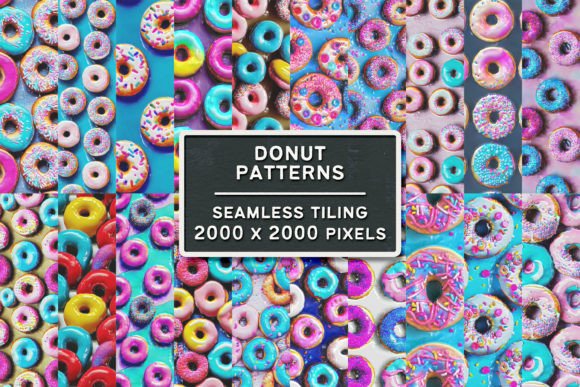
Seamless Tiling Donut Patterns
Seamless tiling donut patterns offer a versatile and visually engaging solution for designers and creators looking to add texture and depth to their projects. These patterns are designed with a circular, ring-like structure that seamlessly repeats across any surface, creating an illusion of infinite space. Each pattern is crafted to maintain visual continuity, making them ideal for use in both digital and print environments.
The Visual Appeal of Seamless Tiling Donut Patterns
The donut pattern’s unique shape allows for a dynamic interplay of negative and positive space. This creates a sense of movement and rhythm, which can be especially effective in backgrounds or as decorative elements. The circular form also lends itself well to symmetry, offering a clean and structured aesthetic that feels modern yet timeless.
These patterns come in a variety of styles, from minimalist geometric designs to intricate floral motifs. Whether you're looking for something bold and contemporary or soft and organic, there's a seamless tiling donut pattern to suit your needs. Their adaptability makes them a valuable asset in any creative toolkit.
Where to Use Seamless Tiling Donut Patterns
Seamless tiling donut patterns are incredibly versatile. They work well in a range of applications, including:
- Digital Backgrounds: Ideal for websites, social media graphics, and mobile app interfaces.
- Print Projects: Perfect for packaging design, editorial layouts, and branding materials.
- Graphic Design: Useful for creating custom templates, banners, and visual assets.
- Paper Crafting: Great for junk journals, collage art, and paper jewelry.
- Branding: Can help reinforce brand identity through consistent visual elements.
Whether you're working on a personal project or a commercial one, these patterns provide a strong foundation for creativity and experimentation.
How Seamless Tiling Donut Patterns Influence Design
Using seamless tiling donut patterns can have a significant impact on how your audience perceives your work. The patterns contribute to the overall visual hierarchy by adding layers of interest without overwhelming the main content. They also enhance readability by providing a subtle background that doesn't distract from text or other design elements.
From a branding perspective, these patterns can help establish a cohesive and professional look. Consistent use of such patterns across different platforms reinforces brand recognition and builds trust with your audience. In editorial design, they can add a touch of sophistication while maintaining a clean layout.
Choosing the Right Pattern for Your Project
Selecting the right seamless tiling donut pattern depends on the specific needs of your project. Consider the following factors:
- Style: Choose a pattern that aligns with the tone and theme of your project.
- Color: Ensure the colors complement your overall design palette.
- Complexity: Balance between intricate details and simplicity based on your intended use.
- Resolution: Opt for high-quality images, such as the 2000 x 2000 pixel format provided.
- Format: Utilize the included .pat files for easy integration into Photoshop.
Testing different patterns in your design software can help you find the best fit. It's also important to consider how the pattern interacts with other design elements, such as typography and color schemes.
Practical Tips for Using Seamless Tiling Donut Patterns
To get the most out of your seamless tiling donut patterns, follow these practical tips:
- Experiment with Layering: Combine patterns with other design assets to create depth and dimension.
- Test Across Devices: Ensure the patterns look good on all screen sizes and resolutions.
- Use for Branding: Incorporate patterns into logos, stationery, and marketing materials for a unified look.
- Explore Commercial Uses: These patterns are suitable for both personal and commercial projects, provided you adhere to licensing guidelines.
- Consider Print Quality: When using patterns for print, ensure they are optimized for the intended output.
By thoughtfully integrating these patterns into your workflow, you can elevate the visual quality of your projects while maintaining a cohesive and professional appearance.